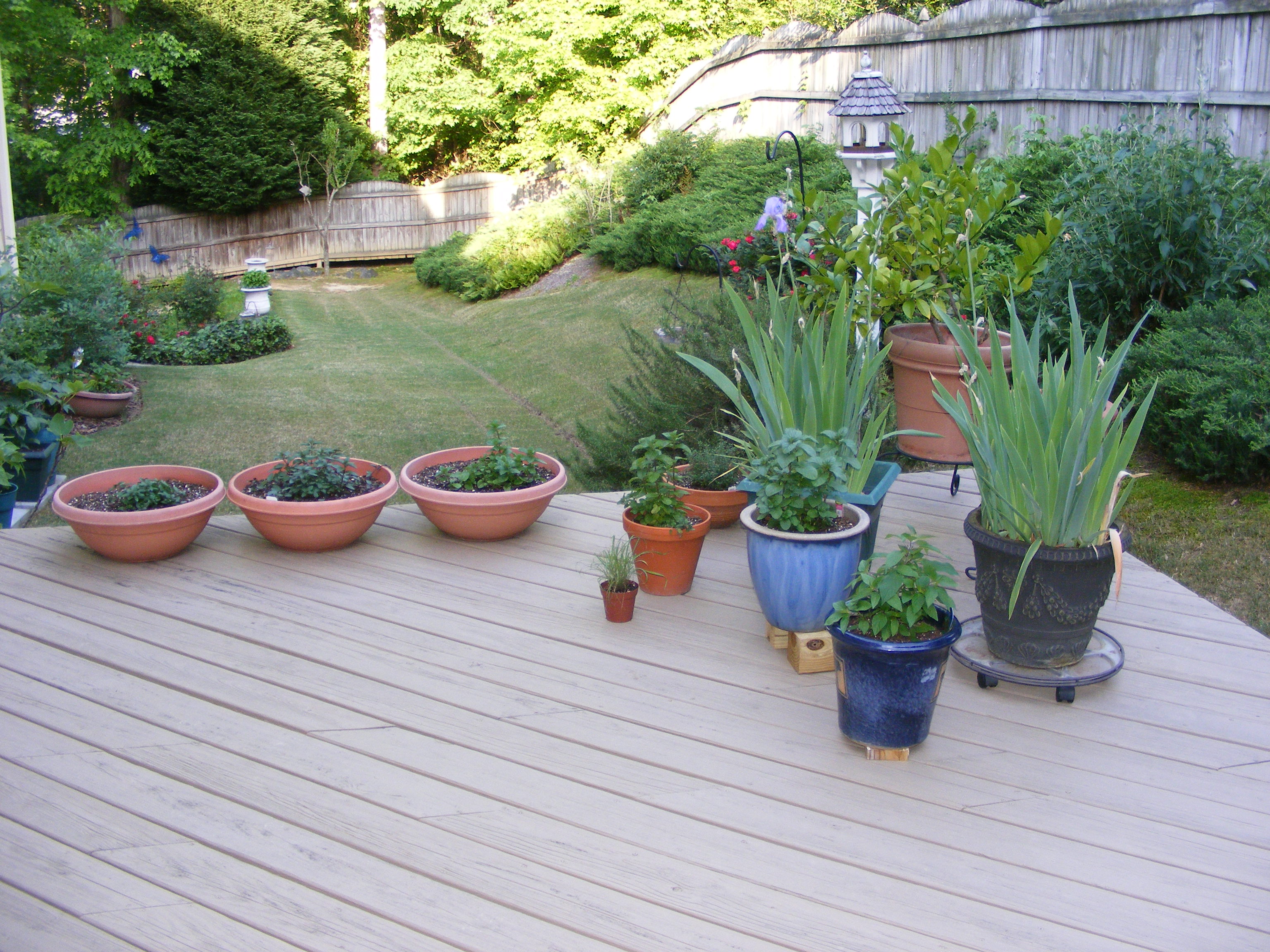
My container herb garden
Anyone that knows me knows that I’m passionate about herbs, especially lemon scented ones. I try every spring to stay on a “plant budget” at the nursery. That means I am careful what plants I buy, know where I’m going to put them, and try to not make impulse buys. Part of my money goes for flowers, then shrubs I have studied about, then herbs that I can’t live without. Three of my favorite herbs are lemon scented and lemon flavored. They make the most wonderful tea and also flavor everything from chicken to cookies.
Lemon Balm
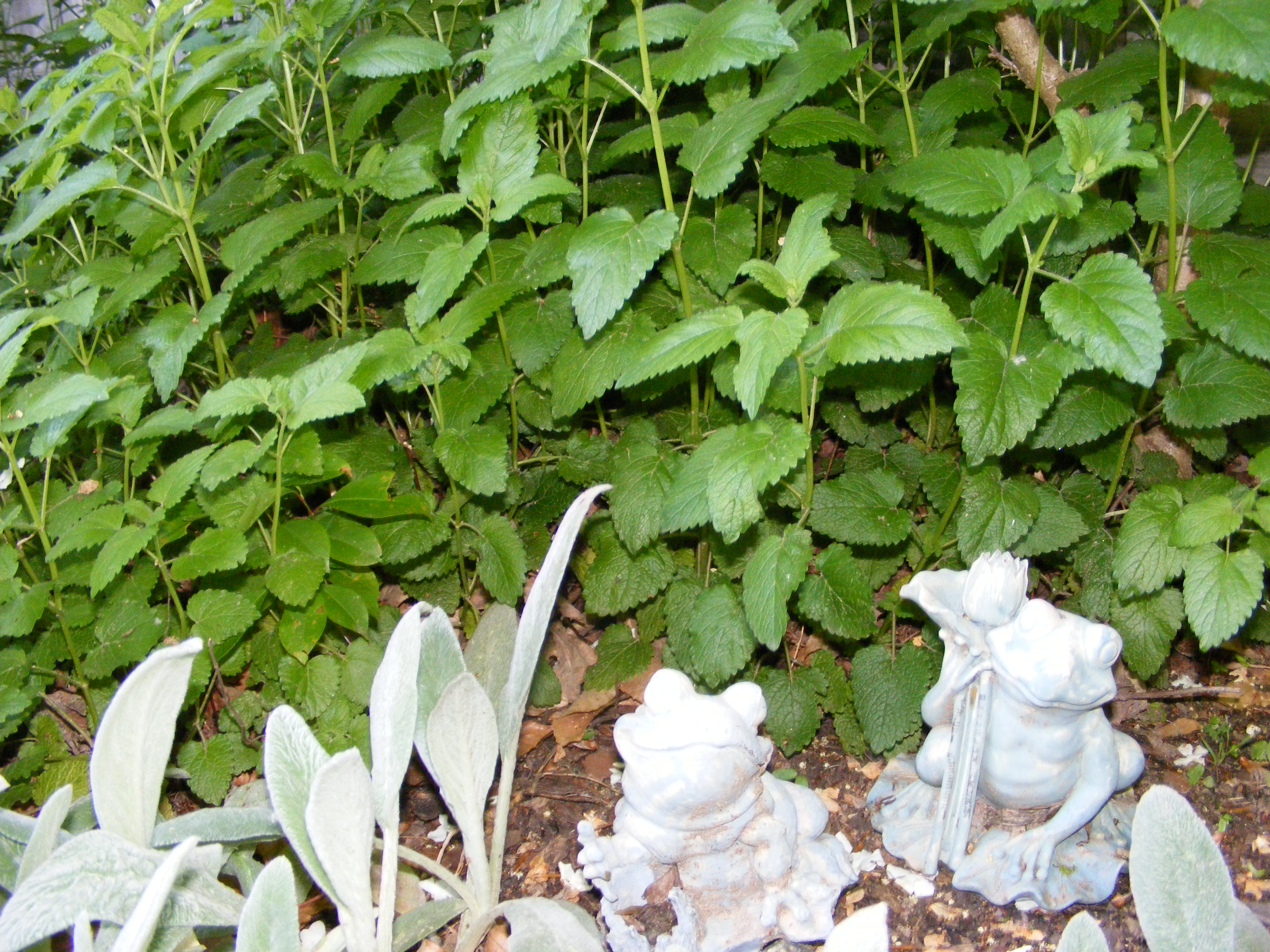
 Lemon balm has medium green heart-shaped leaves. The leaves are slightly serrated and a little wrinkly. It is a hardy perennial growing anywhere from 1 to 3 feet tall. It grows in partial shade, but it will also grow in full sun if it has enough water. Like all herbs, it prefers soil with good drainage. The small, white flowers it has later in the year are insignificant but because of these it can reseed itself abundantly. I would try to contain it in a bed of its own or maybe a very large decorative pot. This herb needs some restraint or it might try to take over your garden when your back is turned. As a medicinal herb, lemon balm is excellent for soothing the nerves and helping with stress-related digestive disorders. In cooking, it has a wonderful lemon scent and subtle lemon flavor. Many people like lemon balm tea made with dried or fresh leaves. Its subtle flavor is great in cakes and cookies, too. Below I have included a few recipes with lemon balm.
Lemon Thyme
Thyme is a twiggy little plant with tiny oval-shaped leaves. Lemon thyme is a little lighter shade of green than the normal, regular thyme plant. Small flower spikes appear later in the year and encourage every bee in your neighborhood to it. Thyme is a perennial that grows from 6 inches to 1 foot in height. It loves to grow in full sun and dry, sandy soil. I  have cooked chicken with lemon thyme, but surprisingly the tiny leaves taste great in salads, too. I’m contemplating covering a dry, sunny hill with this plant. In the least, I would love laying on it and rolling down it. It is a problem area for me and maybe this would be the solution. I certainly wouldn’t mind it if the plant were to spread around. As a medicinal herb, thyme has a soothing affect on nerves and removes mucus from head, lungs, and the respiratory system. I love to add fresh thyme leaves to green tea. It is lemony, soothing, and wonderful. Below are recipes with this lemon wonder.

Lemon Grass
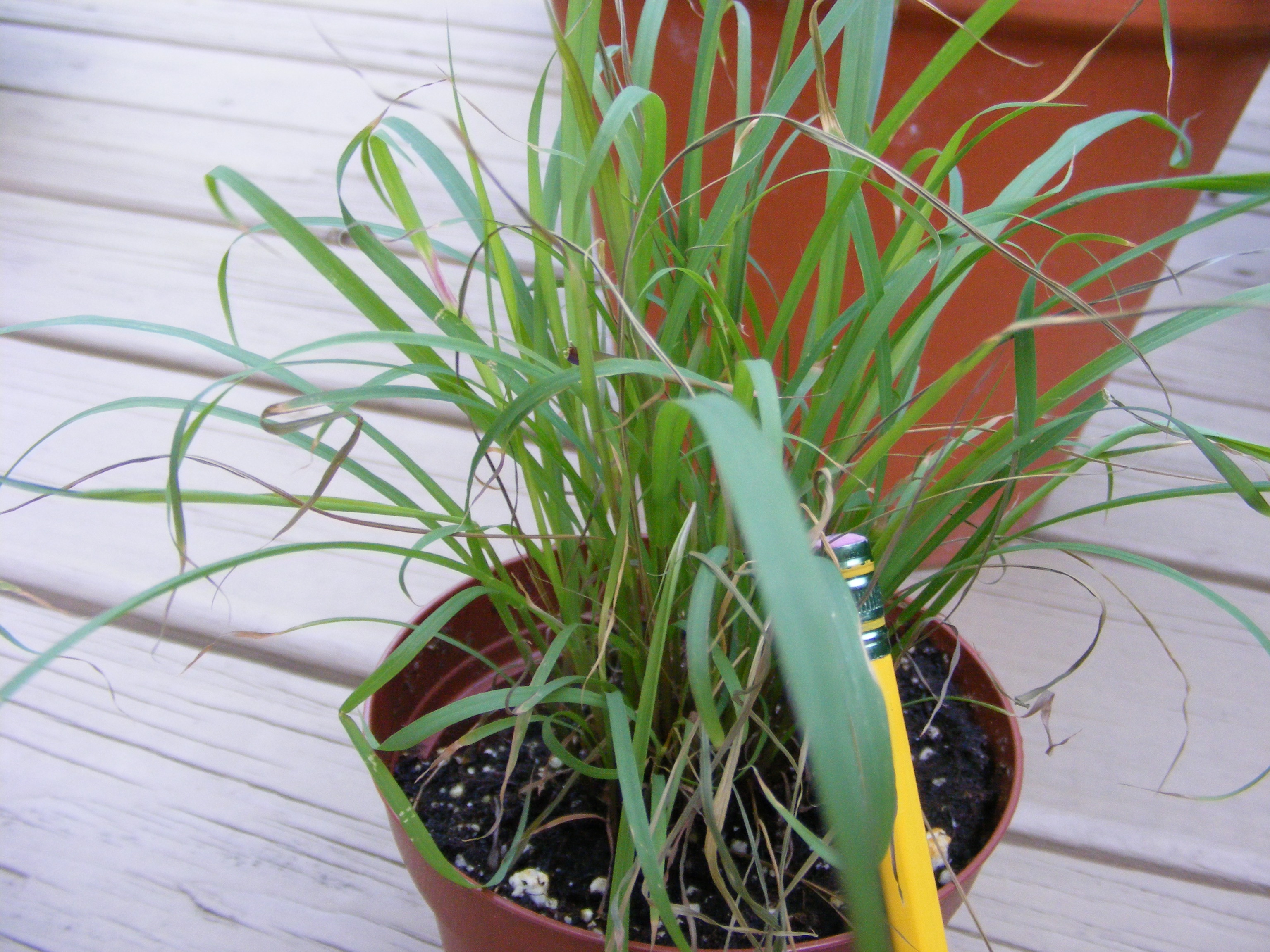
This heavenly scented plant has long, strappy leaves like the ornamental grasses. As you can see in the picture, I just bought my lemon grass. I put a pencil next to the pot to show it is about 8 inches high but will reach 3 to 6 feet in heighth if I plant it in the garden. The nursery worker reminded me that even though it is small it will end up the  size of a compact car. I will plant mine in a large pot to keep it confined. It loves to grow in full sun and it originates from tropical climates. Unless you garden in zone 9 in the US it will not act as a periennial for you. As a medicinal herb, lemon grass helps with insominia, stress and sore throats. Lemon grass is used in a lot of Asian cooking and due to its stringy and tough tecture should be removed before eating any dish. It is wonderful dried in teas.
Recipe Ideas
Lemon balm makes a great tea all by itself. I have a teapot that makes tea for about 3 people. I add 2-3 tablespoons of dried or fresh lemon balm leaves and let it steep for about 15 minutes. Strain through a tea strainer and serve with a few drops of stevia or your favorite sweetener.
Lemon thyme makes a super tea also. I love to steep 1-2 tablespoons of fresh leaves in my 3 person pot for about 10 minutes then add green tea for the last 3-5 minutes of steeping. It makes a wonderful lemony, green tea that I love so much.
Lemon grass, lemon thyme, and lemon balm mixed together make a wonderful tea especially soothing for bedtime. All three herbs dried and then mixed together in the tea pot give a very different taste than any one of these herbs alone. (around 3 tablespoons of dried material all together – steep for 10-15 minutes).
Lemon grass and chicken make a super combo. A friend of mine told me he takes long straps of lemon grass and wraps them around the chicken pieces. He then puts the chicken in a bag with Italian salad dressing and lets it marinade in the refrigerator for a couple of hours. He and his wife tell me it gives the chicken a yummy flavor. I look forward to trying it.
I have also found a super recipe for lemon balm butter cookies over at A Busy Nest. Take a look at it here. They have a lot of incredible recipes and are an invaluable resource. I would encourage you to give them a look.


 Redhead Garden