Gardening Through the Tears

Willow tree

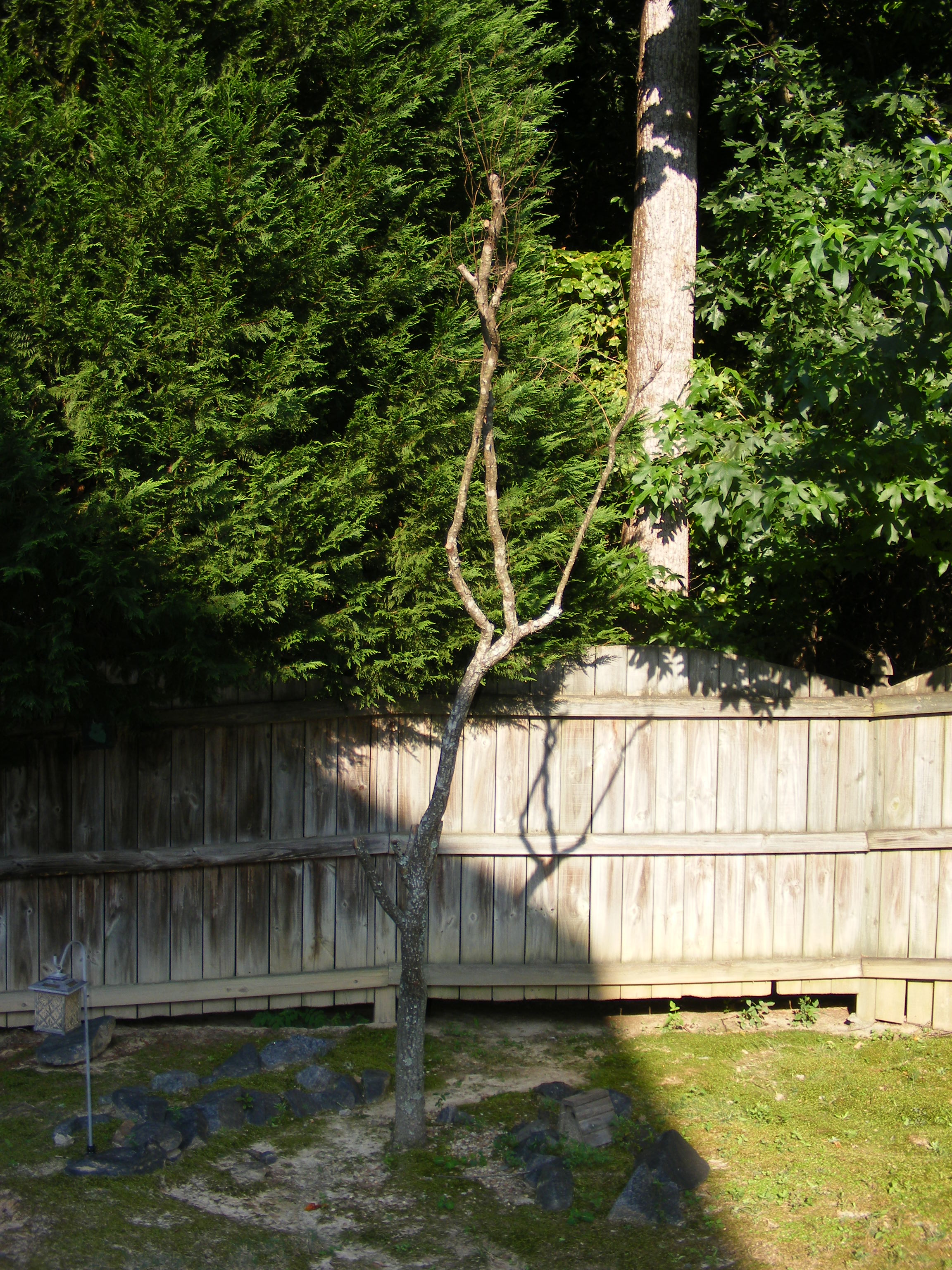
My curly willow tree bit the dust.

I am always so supportive to other gardeners when they lose plants. I tell them that a dead plant is an opportunity to dig it out and try something new.

When I lose a plant, I can’t ever be that philosophical. I’m always upset. The time taken planting and getting it established. All that love and nurturing and watering.

It’s heartbreaking.

My husband said, “Don’t tell your readers you lost a plant!” But really I should tell you that. In gardening you win and you lose. Gardening is all about the dreaming, planning, expectations, loving, watering, feeding, hoping and then sometimes things don’t go as you expected.

I knew when I planted a willow they are notorious for being sickly, and catching every disease that comes by. But I fell in love with a willow I saw in another person’s garden. Their willow tree reminded me of an exotic Caribbean man with long curly branches like dreadlocks. I was sucked in by the exotic charm of it. I had to have one. Unfortunately, mine never flourished like the one I saw in another garden. It mostly limped along, sometimes being nursed through diseases, only to rally again and show a little promise.

You would think I would be glad to be done with it all. But I think I mourn not for what it was but what I dreamed it could have been. At some point soon, I will get excited about what to put in its place. But for right now, I am sad that I have to get out my saw.

Loving the Art of Bonsai

Fall colored bonsaiI was thinking and studying about gardening even when I was a young girl. At the age of 5 or 6, I found books on the art of bonsai in Rich’s department store in Atlanta. As a child, I was mesmerized by the intricacies of the tiny trees. I marveled at the step-by-step pages that showed potting and pruning techniques. I knew when I got older I wanted to create these tiny living sculptures.

When I became a married adult, I wanted to try this fascinating hobby that I had read about. I contacted bonsai experts in my area and also a local bonsai club. I was so excited to attend classes to learn this amazing art form. I was even more intrigued with the location of the classes.

They were held at a monastery in a rural part of our state. The monks had perfected this time-consuming art and sold finished trees, pots, and raw material to the public. They also, at that time, held classes. It was an amazing adventure to sit in a class taught by these gentle monks. Some who looked to be about the age of 60 but later I found out were in their 90’s. This was one of the many ways for the monks to be self-sufficient, along with baking and selling many wonderful types of bread. It is a wonderful memory of a very creative time in my life.

I have enjoyed through the years belonging to the Atlanta Bonsai Club, going to seminars, attending bonsai conventions, taking classes from bonsai masters, and seeking out bonsai nurseries across the country. I have created several beautiful trees and unfortunately lost a few when we moved due to the freezing temperatures in moving trucks. I’d like to share photos of my most recent specimens. Both trees are Trident Maples and achieve a beautiful color in the fall. The Japanese inspired stand was made by my loving hubby who is great at building beautiful things.

The actual word bonsai means “tree in pot.”  The training that a tree goes through to make a bonsai is very technical. It also requires special tools and varying sizes of copper wire.

Bonsai is a type of pruning and training, not a specific variety of tree. Many types of trees can be used as material for bonsais. Some trees to think about using are:

  1. Japanese maples
  2. Various pines (white pine, mugho pine)
  3. Maples (red, white)
  4. Junipers
  5. Boxwoods
  6. Azaleas
  7. Cryptomerias
  8. Cypress

I highly recommend reading Bonsai: Special Techniques by the Brooklyn Botanic Garden, Keep Your Bonsai Perfectly Shaped by Herb L. Gustafson, and Miniature Living Bonsai Landscapes by Herb L. Gustafson.

Showers, Puddles, and a Deluge of Rain

Rain

Right now my life consists of doing things in between rain showers. And in between the showers we get thunderstorms. Any sunlight at all makes everyone in the family look up from what they are doing and exclaim, “Sun – oh, wow!”  I think you get the idea. It’s wet and has been wet for a couple of weeks!

My son arriving home from summer camp with a trunk full of wet clothes didn’t help raise our spirits, either. Hanging up a sopping wet sleeping bag only highlights how damp we already feel.

As gardeners, what can we do in rainy situations?

I have found it is best to wait it out and do your gardening chores when the weather dries out. You run the risk of compacting the soil if you garden in the rain or just after rainy episodes. Besides, trying to plant and dig holes in the mud just makes everything a pain. Also, the plant’s roots can have a hard time becoming acclimated in sticky mud.

With that said, I have been known to sneak outside after a rain shower and carefully pull weeds out of flower beds. The rain makes it easy to pull the little buggers out! I’m careful to stand on flat rocks or bricks placed strategically throughout the flowers. Hopefully, I’m not causing too much compaction.

I also take this time to notice any water accumulating in areas that may need addressing. Be especially careful to keep water away from house foundations. That could be damaging to the outside and inside of your home. Make sure planting beds slope away from your house for proper run-off. Keep your house gutters clean, too.
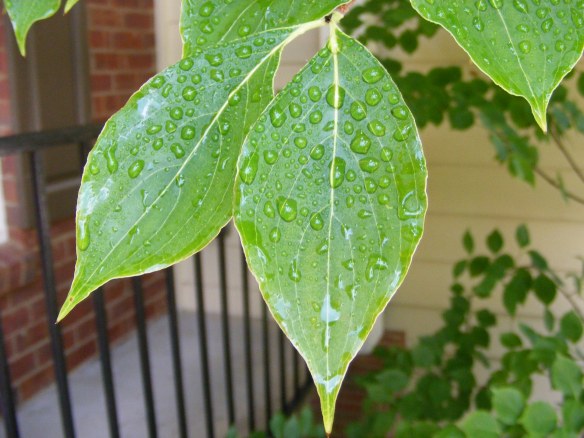
Wet leaf

If you can, don’t have any bare soil. Rain will compact bare soil and quickly deplete it of nutrients. Plants hold the soil in place and act as tiny umbrellas helping to avoid soil erosion. Plants also draw up water, reducing the run-off into sewers. If planting is not possible at the moment, put down mulch to help with erosion.

Make plans to put water barrels at gutter downspouts to catch rain water. We had a roofing company attach forked downspouts on our rain gutters. This ingenious contraption lets you flip a metal switch between your water barrel and your downspout. When a barrel gets full, you can flip the switch and let the water run out the normal course. I even attached a metal hook to a broom handle and I can reach the switch from an open window. The neighbors must think I’m crazy!

I have one last suggestion for rainy day gardening activities. Put together a garden planner. I did this one year and really enjoyed it. Taking care of children has kept me from repeating it year after year, but I really believe this can be a fun, helpful, endeavor.

I bought a very pretty but inexpensive calendar – book style – with several pages for each month. As the gardening season began that year, I made notes in my calendar of projects to do next year. Sounds kind of crazy, but if you garden long enough you begin to understand that a good bit of gardening is planning for next month or next season or next year.  Using a calendar enables you to “schedule” the idea within the appropriate month for that particular project. For instance, if your idea is to plant more daffodils, place it in the calendar in October for fall bulb planting. It helps you stay organized and have fun in the planning stage.

Let’s pray for drier weather. Have fun gardening!

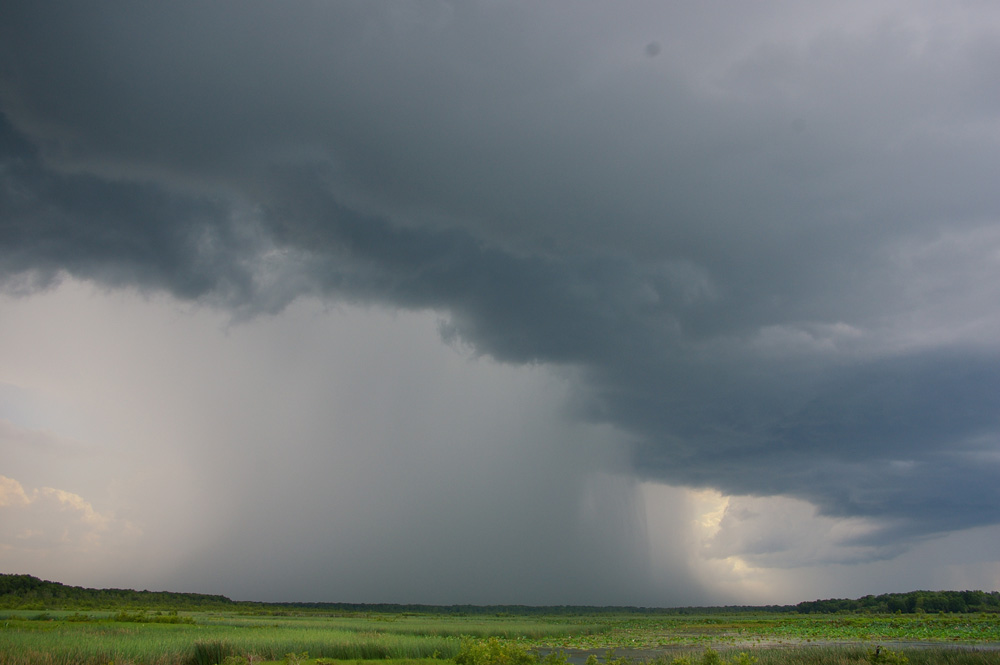
Picture of a thunderstorm at the top of the post is courtesy of Bidgee and is available on Wikimedia Commons.
Deer in the Garden

Deer in the Garden

My garden sits along a deer path. I don’t know whether to be happy or angry about this. So many times, in the evening especially, we can look outside and see deer in the front garden. Many times when we are driving home we will see them at our neighborhood’s front entrance.

I’ve always thought it a little strange finding a creature so large just standing next to my driveway. To me, it is exactly like coming home and finding a unicorn munching on your boxwoods, then turning and running into the forest. I never see deer in my yard without finding it a magical experience.

Every deer I see running through the garden always enters and exits by the same route. It’s puzzling. They must have a path with food along the way that they follow. I guess my house is just one stop along their merry little way.

Most gardeners that contend with a deer problem are always very angry about the issue. I’m lucky in the fact that a neighborhood designated dog area is next to my front garden. I think the doggy smells tend to hurry them along their way. So, I get the bonus of observing them, without too much of the “plant munching” heartache.

I do find it strange that what little damage I have tends to be only with certain shrubs or plants. A Oakleaf Hydrangea has gotten munched while 10 feet away the same type of shrub was not touched. A hosta, I’ve read, is one of their favorites and yet the hostas in my front garden have not been eaten. I don’t understand and at the same time I’m not complaining! I’m glad they are not decimating all of my plants, but I’m intrigued by their picky eating habits.

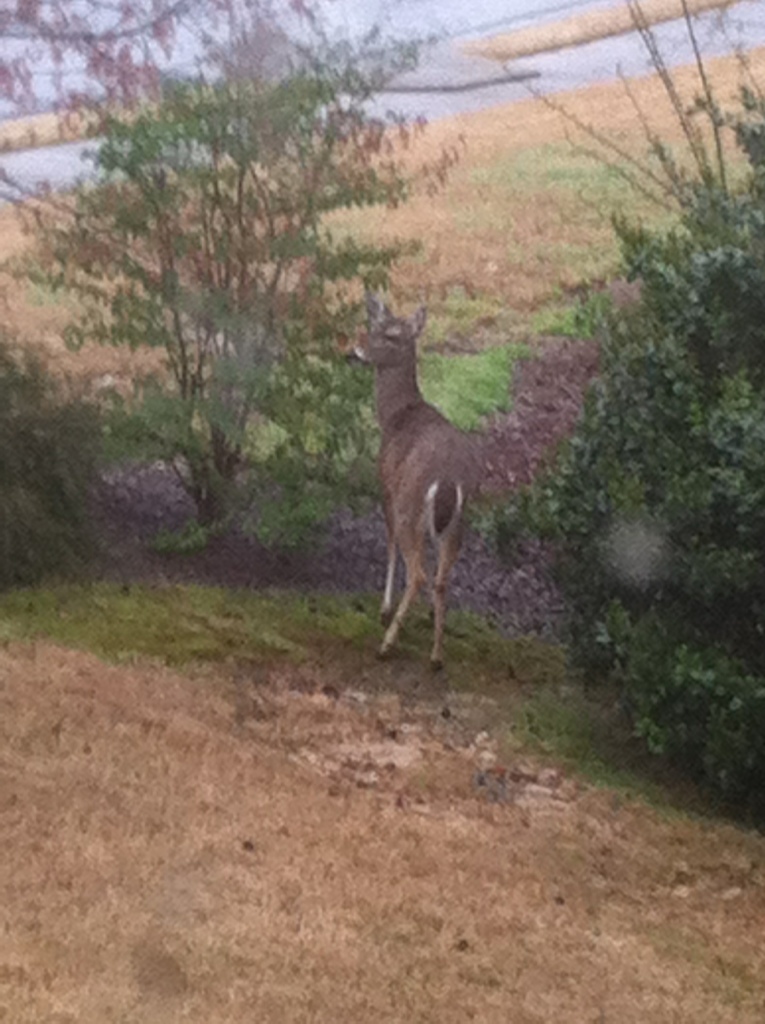
The picture I’ve included is not the best quality, but it was taken by my phone out of our dining room window. You have to be quick to snap the picture before they leave.

I’m happy that they leave my vegetables alone. I believe it’s because my veggies are in the back behind our 6 foot high fence. A friend told me, “Don’t kid yourself! They can jump your fence with the finesse of a ballerina. The reason they haven’t yet is that they can’t see where they will be landing.” So for now, I guess my veggies are safe.

For those of you who struggle with deer here are a few ideas to help shoo them away:

  • Spray deer repellent on and around the plants that are being munched. The smelliest sprays tend to work the best. Reapply every week. I personally would not spray edibles.
  • Put up deer fencing. This can be expensive, but it will be effective. Maybe put it up only in certain areas, like veggie beds, instead of spraying.
  • Try putting dog or cat hair around the areas that are being visited by them. After you brush Spot, deposit the hair. Or, better yet, take a trip to the groomers and leave with a bag of dog hair. Crazy, but I bet it will work!
  • I have heard a lot about Irish Spring soap being used as a deer repellent. Place it in a mesh bag and hang it from branches or attach it to the end of a stick placed in your flower beds. Many people swear by it!
  • And of course, I couldn’t end this subject without mentioning the unmentionable. Although you will never see me spreading urine in my garden, by all means pee to your heart’s content. I won’t tell anyone. Let me know if it works.

Happy (and hopefully deer-free) gardening!